Key Takeaways
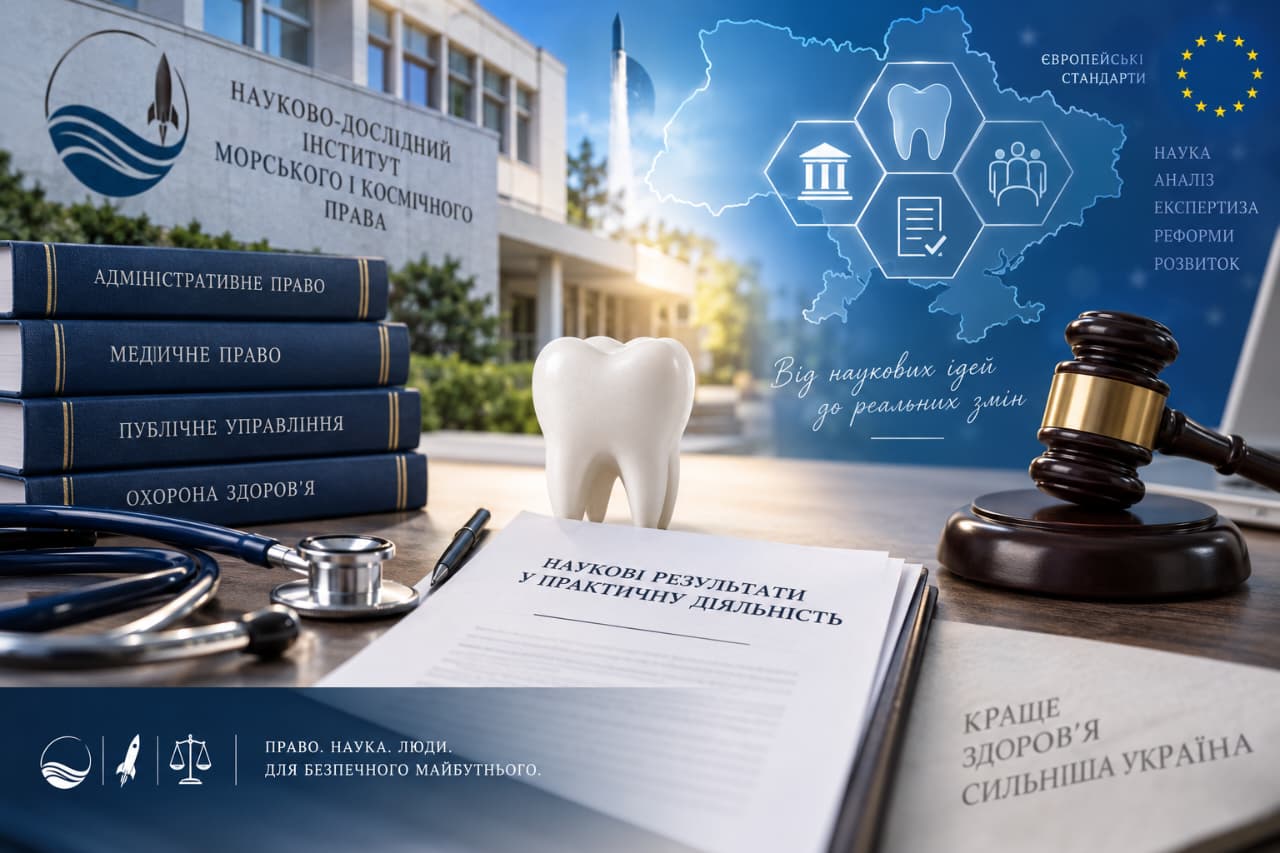
The Institute of Maritime and Space Law is launching a new model for organizing scientific activity.
The core idea is simple: every result must be real, measurable, and verifiable.
The Order dated April 8, 2026 is not a formality. It is a managerial decision that fundamentally changes how science is conducted within the Institute.
What This Order Is About
The document establishes clear rules of the game for 2026:
- approval of the Institute’s scientific activity plan
- introduction of individual performance indicators for each researcher
- implementation of mandatory reporting
- establishment of a principle of documented evidence for all results
The key rule is straightforward:
only those results that are supported by real evidence and meet the established criteria will be recognized
What Has Changed
1. Science Has Become Measurable
For the first time, clear minimum indicators are defined:
- publications in Scopus / Web of Science
- articles in recognized national journals
- expert activity
- contract-based work
- financial outcomes
- practical impact
This means that “abstract effectiveness” is no longer acceptable — concrete metrics are now in place.
2. Personal Responsibility Has Been Introduced
Each researcher now has:
- individual performance targets
- mandatory annual reporting
- forward planning for the next year
In essence, this creates a personal responsibility framework for results.
3. The Principle of Evidence Has Been Established
This is one of the most significant changes.
It is no longer enough to complete a task. It must be proven that the result:
- exists
- was produced within the Institute
- can be verified
Without documents, links, or supporting materials, the result will not be counted
4. Science Is Now Linked to Practice
For the first time, the concept of impact is systematically introduced.
The Institute now evaluates not only the quantity of outputs, but also their real-world application:
- whether the result was used
- by whom
- what effect it produced
This shifts scientific work from theory to practical value.
5. A Clear Role-Based Team Structure
Expectations are now defined depending on position:
- Junior Researcher — involvement and basic outputs
- Researcher — stable productivity
- Senior Researcher — leadership and complex outputs
The Institute is moving toward a mature, structured team model.
What This Means for the Institute
1. Readiness for State Evaluation
The Order is aligned with national evaluation methodology.
This ensures:
- compliance with official requirements
- reduced institutional risks
- stronger positioning of the Institute
2. Process Management
There is now full visibility of:
- who does what
- what results are achieved
- where the gaps are
This transforms scientific activity into a managed system rather than a fragmented process.
3. Strengthened Reputation
Focus on international publications and expert engagement:
- increases institutional credibility
- opens new partnerships
- integrates the Institute into the global scientific community
4. Financial Dimension
The formalization of contract-based work leads to:
- development of applied research
- attraction of funding
- increased institutional sustainability
5. Building a Strong Team
Clear rules naturally lead to:
- growth of active contributors
- the need for others to adapt
This is a normal evolution of a professional organization.
Conclusion
This Order is not about paperwork.
It is about a shift in approach:
- from formal science to result-oriented science
- from process to impact
- from reporting to evidence
The Institute is moving toward a model where science is not a declaration, but a product — one that has value, proof, and practical application.
This is what a modern scientific institution looks like.