Scientific Research Institute of Maritime and Space Law consistently expands its international professional ties and develops new platforms for scientific, educational, and expert dialogue. Another important step in this direction has been the conclusion of a Cooperation Agreement with the Institute of Education and Professional Development, located in Budapest, Hungary.
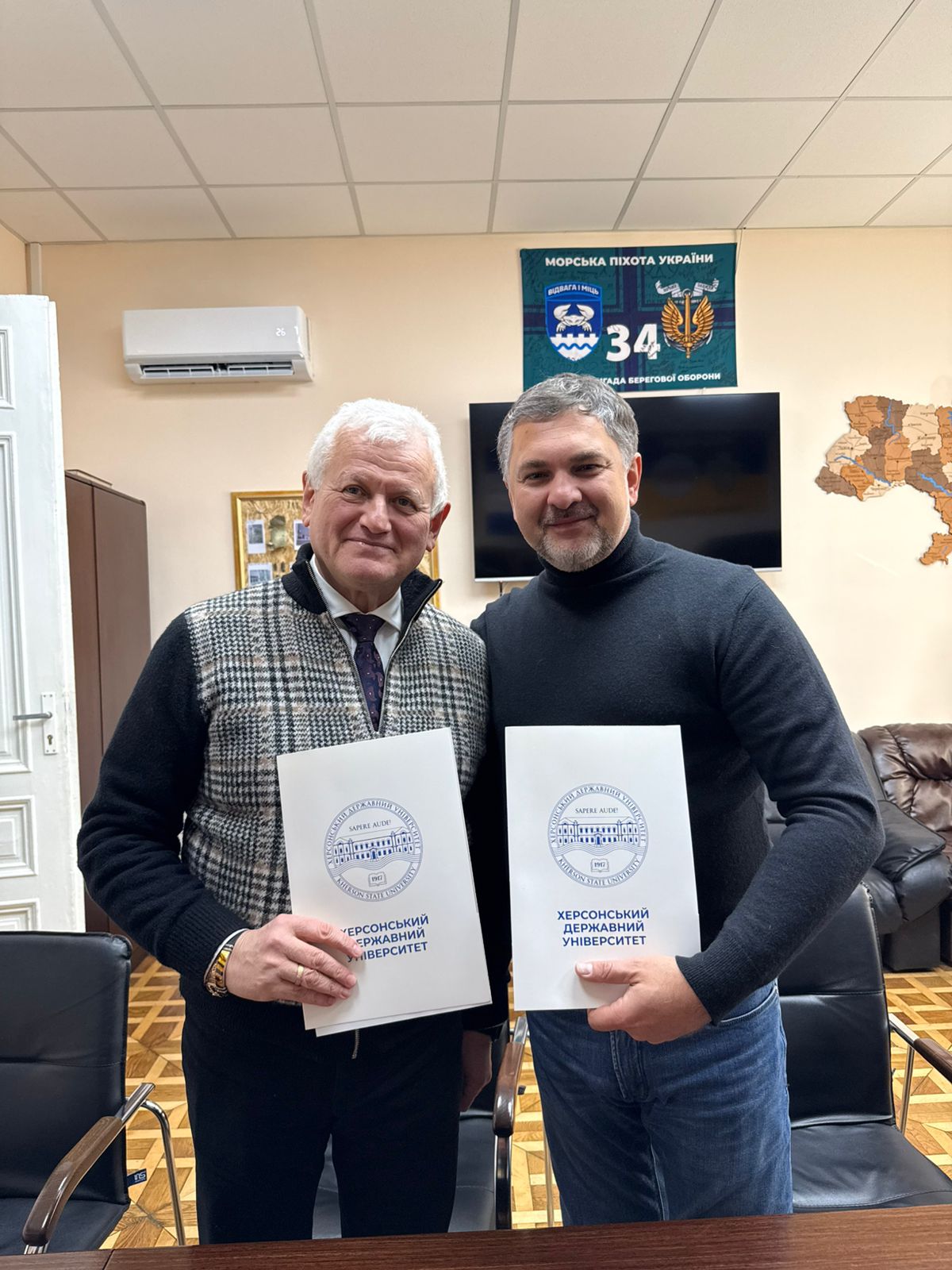
The Agreement was signed by Andriy Ivanyshchuk, Director of the Scientific Research Institute of Maritime and Space Law, and Stepan Lytvyn, Director of the Institute of Education and Professional Development.
The Agreement establishes an institutional framework for systematic Ukrainian-Hungarian cooperation in the scientific, educational, and professional fields and defines a broad range of areas in which the parties intend to develop a long-term partnership.
International Partnership as a Component of Modern Scientific Development
In today’s environment, scientific activity increasingly extends beyond the boundaries of individual institutions and national academic communities. The exchange of knowledge, professional practices, research findings, and expert approaches has become an essential prerequisite for the development of competitive science.
For this reason, expanding international cooperation is one of the key areas of activity of the Scientific Research Institute of Maritime and Space Law.
The signed Agreement provides for combining the scientific and organizational capacities of both parties to implement joint initiatives, create a professional environment for the exchange of experience, and develop new formats of scientific and educational cooperation.
Such cooperation is particularly relevant in the context of Ukraine’s European integration, the deepening of international academic ties, and the need for greater involvement of Ukrainian researchers in the European professional and academic community.
From Joint Research to Professional Exchange
The Agreement covers a broad range of areas of cooperation in the scientific, technical, and educational fields.
The parties have agreed to facilitate the implementation of joint research programmes, creating opportunities to combine scientific expertise, develop interdisciplinary research projects, and produce results of both academic and practical significance.
A separate area of cooperation involves the organization and holding of scientific and scientific-practical conferences, symposia, seminars, round tables, lectures, and other professional events.
Such formats are intended to serve as platforms for professional discussion, presentation of research findings, exchange of academic views, and establishment of direct contacts between specialists from Ukraine and Hungary.
Another important component of the partnership will be joint publishing activities, including the preparation and publication of scientific and methodological literature.
This will create additional opportunities to promote research results, disseminate researchers’ work within the international academic community, and develop joint intellectual and scholarly products.
New Opportunities for Researchers, Academic Staff, and Young Scholars
The Agreement is not limited solely to scientific events and research activities.
An important part of the document is devoted to the development of academic and professional mobility. The parties have agreed to facilitate opportunities for students, postgraduate students, and academic staff to participate in education and professional training programmes, which is particularly important for the professional development of young researchers and the expansion of their international experience.
The Agreement also provides opportunities for representatives of both parties to participate in scientific events organized independently or jointly with other educational and research institutions in Ukraine and Hungary.
Thus, the signed document lays the foundation not only for bilateral cooperation but also for the gradual development of a broader network of professional and academic collaboration.
Joint Working Groups and Expert Cooperation
A separate section of the Agreement addresses the practical organization of cooperation between the institutions.
The parties have agreed to cooperate in conducting public events, training programmes, consultations, and other forms of dissemination of professional information.
Joint working groups involving representatives of both institutions may be established to implement specific tasks and initiatives.
This mechanism makes it possible to transform institutional agreements into practical cooperation, including the preparation of research projects, expert materials, educational initiatives, and other joint activities.
The Agreement also provides for the mutual exchange of information necessary for effective cooperation and for informing the public about the results of activities jointly undertaken by the parties.
Partnership Based on Equality and Mutual Respect
The fundamental principles of cooperation are equality of the parties, partnership, and mutual consideration of interests.
The parties have undertaken to fulfil their commitments in good faith, work jointly toward achieving the objectives set out in the Agreement, and resolve any disputes that may arise through negotiations.
At the same time, the Agreement provides for a flexible mechanism for implementing individual projects. Where funding is required, the relevant terms, scope of expenditure, and procedures for the use of funds may be determined by the parties through separate arrangements.
This approach creates an appropriate organizational framework for the gradual development of the partnership in accordance with actual scientific, educational, and professional needs.
A Long-Term Framework for Cooperation
The Agreement has been concluded for a five-year term. At the same time, it provides for the possibility of automatic renewal unless one of the parties gives written notice of termination within the prescribed period.
The long-term nature of the Agreement demonstrates the parties’ intention to establish not merely occasional professional contacts but a systematic model of international cooperation.
The Agreement has been drawn up in Ukrainian and Hungarian, further emphasizing the bilateral and international nature of the partnership.
New Horizons for the Scientific Research Institute of Maritime and Space Law
The development of international partnerships is one of the effective instruments for integrating Ukrainian science into the European intellectual and research area.
For the Scientific Research Institute of Maritime and Space Law, cooperation with the Institute of Education and Professional Development opens up new prospects for joint research, scientific and educational projects, international events, professional exchange, and the presentation of Ukrainian research achievements abroad.
At the same time, partnerships of this kind have significance extending far beyond the activities of an individual institution. They contribute to strengthening academic ties between Ukraine and European countries, fostering a culture of professional dialogue, and creating new channels for the exchange of ideas, knowledge, and experience.
The conclusion of the Cooperation Agreement represents another consistent step by the Scientific Research Institute of Maritime and Space Law toward expanding its international presence, strengthening scientific ties, and developing partnerships capable of transforming professional dialogue into tangible scientific and socially significant results.
The Scientific Research Institute of Maritime and Space Law continues its efforts to expand international cooperation and remains open to partnership initiatives aimed at advancing science and education, strengthening the expert community, and promoting international professional exchange.